Commission reverses itself, authorizes military instructors to teach physical education
Credit: Jane Meredith Adams/EdSource Today
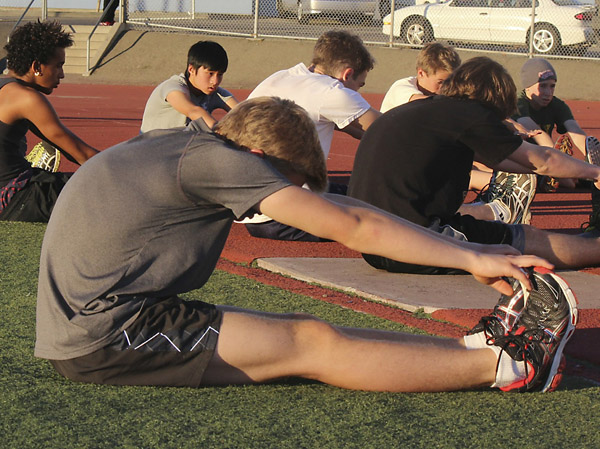 Credit: Jane Meredith Adams/EdSource Today
The California Commission on Teacher Credentialing reversed itself and voted earlier this month to offer military instructors a limited authorization to teach physical education. In the eyes of physical educators, respect for their field was dealt another blow.
The motility would allow armed services instructors, who are non required to concord a bachelor's degree, to teach physical education – just simply fitness and drill and just in the context of their Junior Reserve Officer Preparation Corps (JROTC) and basic war machine drill classes. Nevertheless limited, the proposed educational activity authorization is viewed by some as a rebuke to the national push for improved teacher quality.
"Y'all are giving a supplemental dominance to someone who doesn't take a teacher credential and may not have a available's degree," said Alicia Williamson, a commissioner who voted against the proposal, which passed 7-four. "It undermines the teaching profession. At that place is no other core subject we'd ever do this for."
Others see information technology as but the reverse – a style to improve the quality of concrete teaching didactics already being provided in JROTC courses, which, at the discretion of local school boards, tin be taken by students to fulfill the concrete education requirement needed for loftier school graduation.
The thing, which has been contentiously debated earlier the commission since concluding September, is non yet settled. Before the proposed "special teaching authorization" in physical education is adopted, the commissioners will vote again on the issue at their June coming together.
If approved, the new teaching say-so would probable make it easier for school boards to justify granting physical education credit for military preparation classes, the commission acknowledged in its proposal. The issue of physical didactics credit for military machine grooming has been a firecracker on several school boards, with some board members in favor of armed forces preparation on campus, some against, and others in favor of military training just not if it takes away from physical teaching teaching.
"I am not anti-JROTC," said Sandra Lee Fewer, president of the San Francisco Board of Education. Simply childhood obesity is a problem and the land has decided that physical education is an bookish priority, she said. "That is why teachers with P.E. credentials should be the only ones immune to fulfill that requirement," she said. "In San Francisco, it became a political boxing."
Physical education is the only required loftier school surface area of written report that school boards routinely permit students to fulfill with courses taught by instructors who don't concord a bachelor's degree or a single-subject credential in the content area. Local schoolhouse boards have said they waive the requirement because students need flexibility in their schedules to take electives or re-take classes in other subject areas.
Past passing 2 tests, i in basic academic skills and another in noesis of physical education, military instructors could add the physical education teaching authorization to their ROTC or military drill credential. The authorisation would apply to grades 12 and below, but military instructors would not be immune to teach physical pedagogy to the general student body.
Formally recognizing military instructors for a higher level of competence will encourage them "to go meliorate prepared and more knowledgeable, safer and more responsible in the work that they already are doing," said Linda Darling-Hammond, chair of the credentialing commission.
JROTC and war machine drill are high school electives that use Army, Navy, Air Force, Marines, Coast Guard and other armed forces curriculum covering fitness, leadership, civics and U.Southward. history, amidst other topics. California has 360 JROTC high school programs; each program must enroll at least 100 students, co-ordinate to armed forces specifications. The new teaching authorisation also would be bachelor to instructors in the California Cadet Corps program, which is run nether the California National Baby-sit and the California Military machine Department. The Cadet Corps has 6,000 students in the state, according to the grouping.
To concur a preliminary pedagogy credential for JROTC or military drill, instructors must take four years of military machine experience and concur a high schoolhouse diploma or have passed the General Educational Development (GED) tests. To advance to what'southward chosen a "clear" credential, military instructors must teach at least one course for four semesters and consummate 135 hours of preparation in a program canonical past the credentialing commission. They likewise must complete a course in wellness teaching and receive training in cardiopulmonary resuscitation.
Leaders of military programs said that their instructors take taken pains to improve their physical education preparation. "We are making a concerted effort to ensure that the lessons delivered are … in line with California content standards," said Lt. Col. Mark Ryan, banana executive officer of the California Buck Corps.
For JROTC instructors, who usually are retired armed services personnel, the new authorization would be optional – information technology is not required for their piece of work, the commission said.
That led Jane Robb, an instructional specialist with the California Teachers Association, to question why the new authorization was needed. "It appears to us that this item is basically being used to bolster the efforts to convince local school boards, when that issue comes before them, to permit bones war machine drill to count toward P.Due east. credit for high school graduation," Robb said.
The commission'southward report stated that the lack of a concrete didactics credential for military machine instructors "may explicate the reticence of some local governing boards to recognize these courses equally coming together the physical education graduation requirements."
Teri Burns, a senior manager of the California School Boards Clan, praised the proposed dominance because it would inform school boards as they try to determine whether to grant physical pedagogy credit for armed services instruction. "Information technology allows a fuller word at a board meeting of 'Is this what we want to practice? Should the board be giving credit? Should it not?'" Burns said.
Being able to grant concrete education credit is extremely helpful in sustaining enrollment in armed forces classes, said Brigadier General James Gabrielli of the California National Guard. "Approving this request will opposite the trend in the California Buck Corps and Junior ROTC programs that have suffered steady attrition due to local school district policies that have eliminated concrete education credit," he told commissioners when they commencement considered the proposal last autumn.
Only Darling-Hammond said that telling school boards whether to grant P.E. credit for JROTC is beyond the purview of the commission. Encouraging instructors to improve their training is not. "Information technology our job to enhance competence and not to lower standards," she said.
"We are fighting this," said Joanie Verderber, a past president of the Sacramento-based California Association for Health, Physical Education, Recreation and Trip the light fantastic, the leading physical education instructor system in the state. She said she regretted that the issue has pitted JROTC against physical didactics.
"Both stand up individually and have merit of themselves," she said. Just, she said, "When we take courses that are identified in didactics police every bit role of the basic requirement for a high school diploma, those courses are taught by someone who holds a unmarried field of study credential and must have a baccalaureate degree."
To get more reports like this one, click here to sign up for EdSource'southward no-toll daily email on latest developments in pedagogy.
fleischmannexprion.blogspot.com
Source: https://edsource.org/2014/commission-reverses-itself-authorizes-jrotc-instructors-to-teach-physical-education/63547
0 Response to "Commission reverses itself, authorizes military instructors to teach physical education"
Post a Comment