What Is the Best Way to Really Prove to Yourself That You Understand an Idea?

Predictions nearly the future lives of humanity are everywhere, from movies to news to novels. Some of them prove remarkably insightful, while others, less and so. Luckily, historical records let the people of the present to peer into the past and revisit some of the zanier predictions.
All of the post-obit predictions accept proven absolutely, irrefutably wrong. Some are laughably, ridiculously incorrect, while others seem like fantastic daydreams — possibilities that time forgot. Fortunately, in that location is however plenty time for some of them to come up true.
No Home Computers — Ken Olsen
It must be terrible to earn the honor of 'wrongest person in the history of the world,' but Ken Olson seems to agree that title currently. Though he was the founder and CEO of a technology company, it seems his faith in new and upcoming technologies was sadly express.
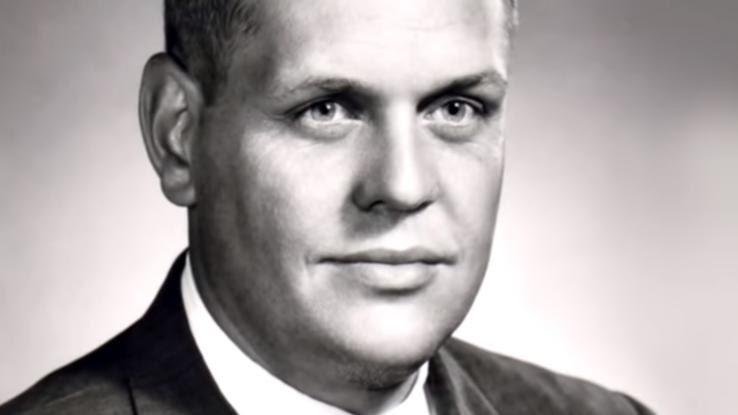
In 1977, right before the first inklings of the personal figurer craze, he remarked, "There is no reason for any individual to have a computer in his dwelling." Not only practice we now have computers in our homes, only we carry them around in our pockets!
Worth Its Weight in Steel? — Thomas Edison
Depending on who you talk to, Thomas Edison was either one of America'due south greatest inventors or one of its greatest frauds. Based on several Edison predictions that have since been proven to be unfounded and untrue, one thing is clear: for all he could burnish urban center streets, he couldn't illuminate the course of the futurity
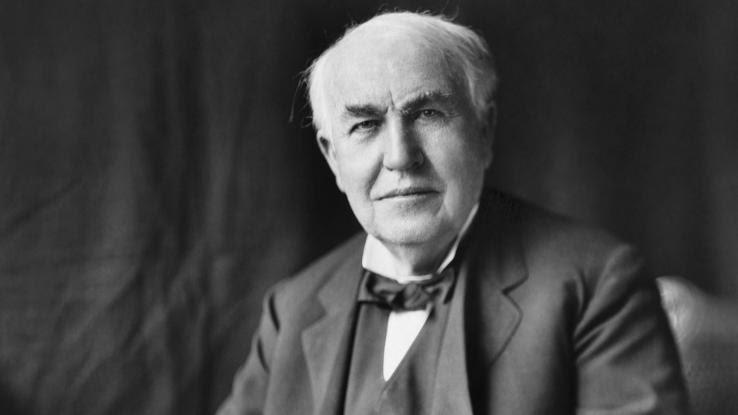
I prediction in particular is both extraordinarily humorous and slightly unsettling. Edison believed that steel would become more valuable than gold, and that future homes would exist filled with steel products — even baby cradles would be common cold, hard steel. Obviously, that's not true.
One Large Toe — Richard Cloudless Lucas
Medical history is full of crazy ideas, and predictions for the field are no exception. One surgeon, a man named Richard Clement Lucas, made a rather baroque exclamation to students and fellows during a lecture to the Royal College of Surgeons in 1911.

He prophesized, "Human beings in the future will go one-toed. The small toes are being used less and less as time goes on, while the great toe is developing in an astonishing manner." Then, basically, Lucas thought we'd go the way of the horse and develop a single, gigantic toe. Ew.
Movies Are a Fad — Charlie Chaplin
Charlie Chaplin is oftentimes remembered as one of the greatest silent-pic actors and entertainers in the world. He also wrote and directed some of the almost memorable and beloved classic films. Despite all of that, even so, he had some strange ideas about 'the pictures.'
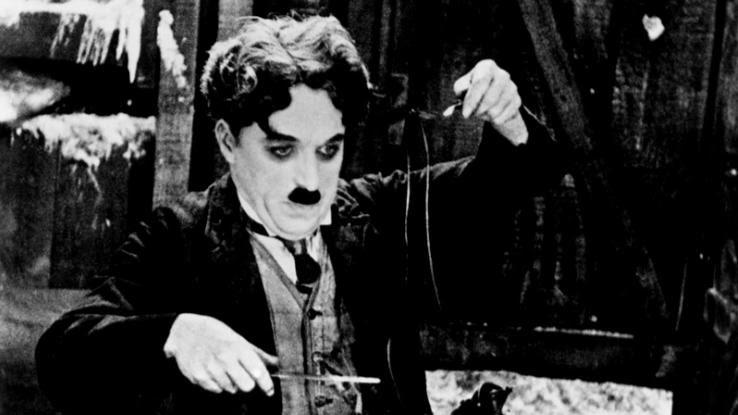
He one time said, "Movies are a fad. Audiences actually desire to meet live actors on a stage." For someone who fabricated his career in motion pictures, he certain didn't have faith in the medium. While musical and live theater has made a slight comeback in recent years, the silver screen is even so king.
Internet Shopping Will Never Supersede Malls — Clifford Stoll
Because of online retailers, fewer and fewer people are going to malls and physical retail locations to satisfy their shopping needs. This is precisely the opposite of what Clifford Stoll assured readers would happen in a 1995 commodity of Newsweek.
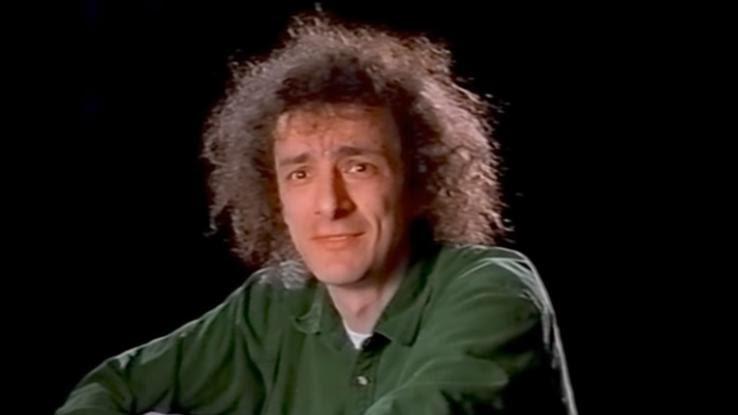
He blatantly told audiences, "The truth is no online database will replace your daily newspaper." Also, "Nicholas Negroponte, managing director of the MIT Media Lab, predicts that we'll presently buy books and newspapers straight over the Net. Uh, sure." Your sarcasm simply makes this prediction neglect funnier, Mr. Stoll.
TV Will Never Concluding — Darryl Zanuck
The former head of Twentieth-Century Trick is infamous for making one of the all-time worst predictions in the history of humankind. in 1946, he publicly shared his doubt about the longevity of the tv set. Like a know-information technology-all that actually knows very little, he said, "Television won't be able to concur … subsequently the start six months."
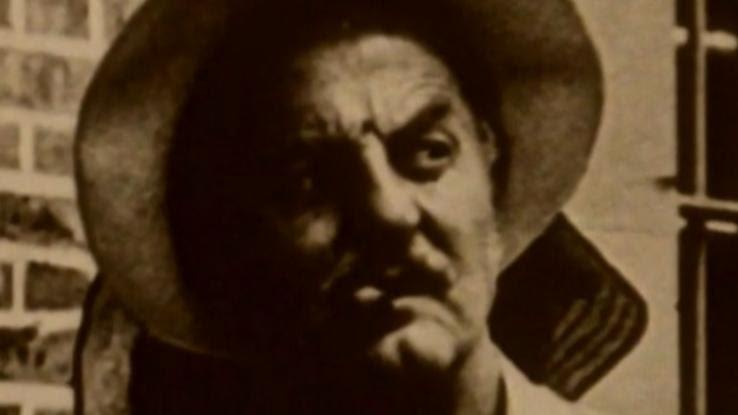
Equally if he were twisting the pocketknife even deeper into his own back, he slyly added that "people will soon get tired of staring at a plywood box every night." He was a piffling right. TVs soon ditched the furniture expect.
Legs for Days — Dorothy Roe
According to 1950's newspaper editor Dorothy Roe, women in the twelvemonth 2000 would resemble Wonder Woman and Xena more than than Lady Gaga or Emilia Clarke. She believed that women of the time to come would all be half dozen anxiety tall and extremely muscular.

Roe writes, "She volition be more than six feet tall, wear a size xi shoe, have shoulders similar a wrestler and muscles like a truck commuter." If women of 2020 were expected to be this large and aggressively built, what were men supposed to accept been similar? Literal giants?
Hose Downward the House — Waldemar Kaempffert
The duties of a housewife were in one case manifold. In addition to keeping the house make clean and tidy, housewives were expected to do the shopping, mend and wash a family's wearable, melt all of the meals and manage the family budget. Information technology was a tough job, and information technology notwithstanding is today.

That'due south why Kaempffert's vision of a washable, hoseable house seems merely equally bonny today as it did in 1950. The futurist wrote, "Furniture (upholstery included), rugs, draperies, unscratchable floors — all [would be] made of synthetic material or waterproof plastic." Sure, piece of cake to make clean. But not very comfortable.
150 Years Sometime — F.Eastward. Smith
While modern medical techniques and treatments accept extended the lives of millions if not billions of people, they have yet to produce an boilerplate lifespan of 150 years. This fact goes confronting what British politician and close friend of Winston Churchill F.Due east. Smith said almost the matter in 1930.
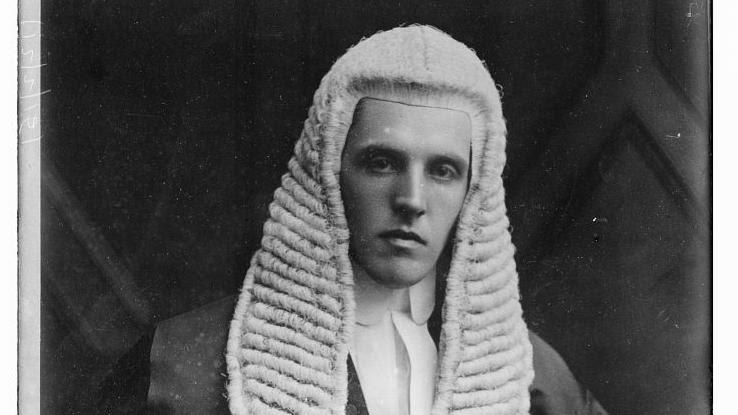
Smith wrote that within 100 years — 2030 at the latest — people would enjoy an average lifespan of upwards to 150 years. Smith wrote, "…how will youths of 20 be able to compete…against vigorous men still in their prime at 120?" We may never know.
The iPhone Is Temporary — Steve Ballmer
People often say that green is the color of green-eyed. Well, Steve Ballmer — the one-time CEO of Microsoft — must have looked like the Wicked Witch of the West when he snatched an employee's iPhone out of their mitt and pretended to stomp it into tiny little pieces.
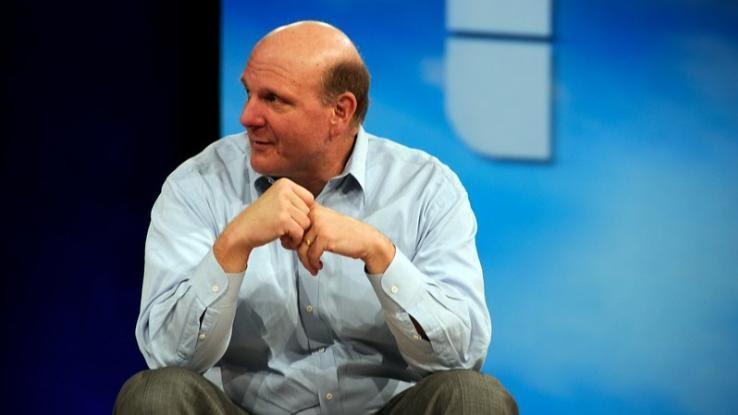
Information technology was probably a long-belated reaction to how wrong he ended upward existence about the iPhone's success. When the Apple tree phone was initially released, Ballmer told the press, "There'southward no take chances that the iPhone is going to get whatsoever significant market place share. No adventure." Sore losers are no fun.
Ape Chauffeurs — RAND Corp.
While self-driving cars continue to undergo further testing and development, there's little chance at nowadays of making it to your destination without lifting a finger. Unless, of course, a burly ape chauffeur is driving you around.

In 1967, some of the country's smartest and most well-informed futurists and scientists pooled their resources to brand predictions virtually life in the year 2020. One such guess past the RAND Corporation stated that humans would be breeding intelligent animal servants, such as ape chauffeurs. Where'south our orangutan butler?
Y2K Is the End of Everything — John Hamre
Equally the 1990s came to a close, a new and mysterious threat took the earth by storm: Y2K. Coined by programmer David Eddy, the thought came from a misunderstanding of how piece of cake it is to upgrade a figurer's software.
John Hamre, the Usa Deputy Secretary of Defense in 2000, was put in accuse of treatment both the authorities's computer security and the public'southward business during the year alter. He thought that the fallout from Y2K might be bad enough for martial law to be declared!
Humans on Mars — Peter Schwartz and Peter Leyden
1997 was an exciting year. The domain proper noun for Google was registered, Steve Jobs returned to Apple and the outset Grand Theft Auto game striking store shelves. It was a time of hope and apprehension, and many wondered how speedily new technologies would change the world. Simply perhaps Wired writers Peter Schwartz and Peter Leyden were a petty too optimistic.
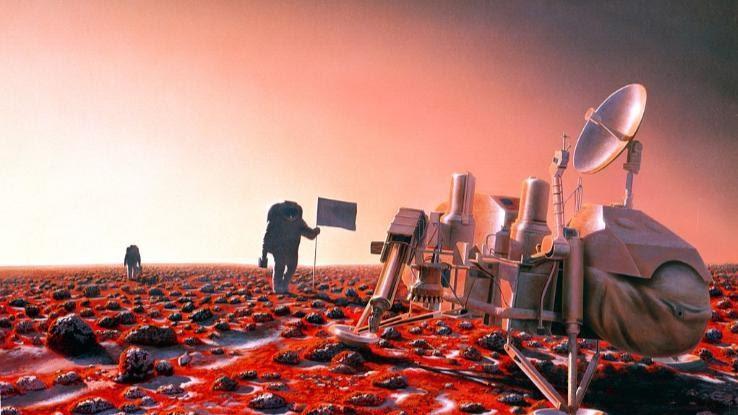
They theorized that man beings would physically make it on Mars past 2020. While in that location are some plans to make that happen in the future, and then far, simply fictional characters in film, television set and literature have visited the cherry planet.
Flight Cars — Pop Mechanics
Since the time of the Wright brothers and Henry Ford, people have dreamed of a mode to escape automobile traffic and take to the skies in a personal vehicle. Who doesn't want to trade gridlock for soaring through the clouds?.
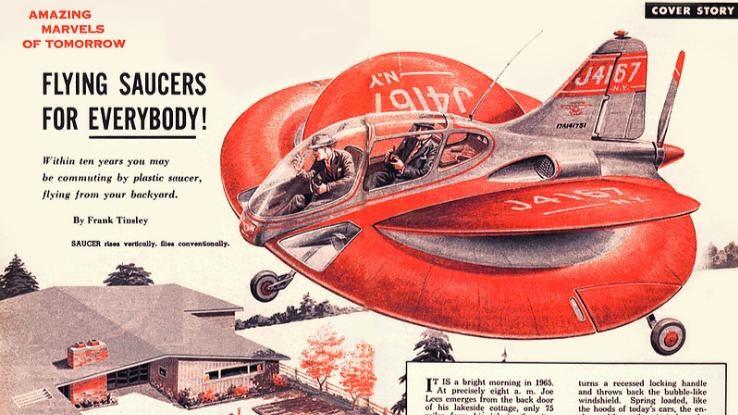
Yet, concept flight cars take never fabricated it past the conceptual phase, and consumers have been teased and tormented by the hope of airborne cars since at least the 1950s. Back so, Popular Mechanics declared that the historic period of the flight automobile was simply effectually the corner. Which corner is that, again?
Floating Houses — Arthur C. Clarke
Long before Pixar released Up, people wondered about the feasibility of floating existent estate. Arthur C. Clark was an extraordinary scientific discipline-fiction writer, and he wrote a wonderfully fictional prediction concerning floating homes.
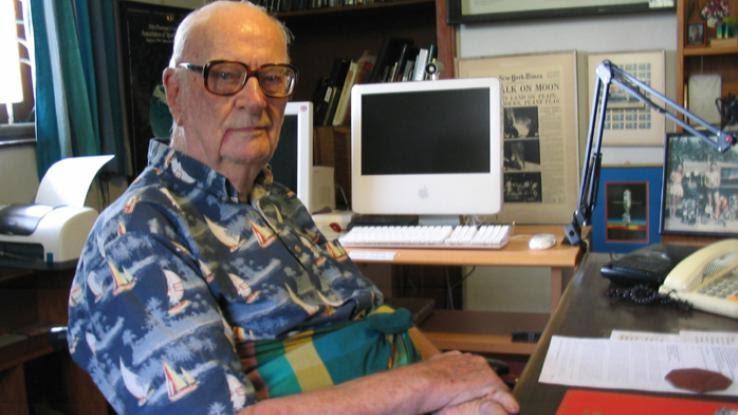
He stated that the abode of the hereafter would be "an untethered paradise." While RVers may be able to park their secondary homes nearly anywhere, contemporary homeowners are notwithstanding stuck in place.
Tooth Banks — Lester David
Dental care remains one of the about expensive forms of healthcare in the modern world. Many people only visit their dentist when absolutely necessary, which can finish up costing patients far more a few annual cleanings and bank check-ups.

That's why the idea of a tooth banking concern is a pretty attractive 1. In 1947, journalist Lester David proposed that in addition to life-saving blood banks, at that place would be 'tooth banks' by the starting time of the new millennium, making false teeth or dentures obsolete. We're all the same waiting.
Abyssal Cities — Isaac Asimov
Isaac Asimov whole-heartedly believed that the human population would reach enormous numbers by the 2000s, necessitating unlikely but crucial habitation of the freezing poles, barren deserts, and the deep, blue ocean. His thought of life in 2014 is starkly different from reality.
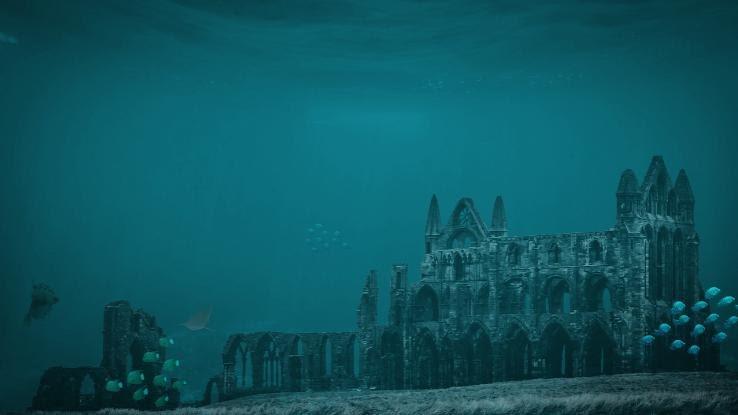
He said that " … 2014 will see a good first made in the colonization of the continental shelves. Underwater housing will have its attractions to those who similar h2o sports, and will undoubtedly encourage the more efficient exploitation of ocean resources, both nutrient and mineral." Um, not so much.
Fewer Letters — John Elfreth Watkins Jr.
This prediction is over a century erstwhile and nevertheless has yet to come true. Proposed in 1900 equally office of the Ladies' Domicile Journal, this prediction foretold three deaths. The victims? The English letters C, X, and Q. That's correct — futurist John Elfreth Watkins Jr. idea that the alphabet might soon get a downgrade.
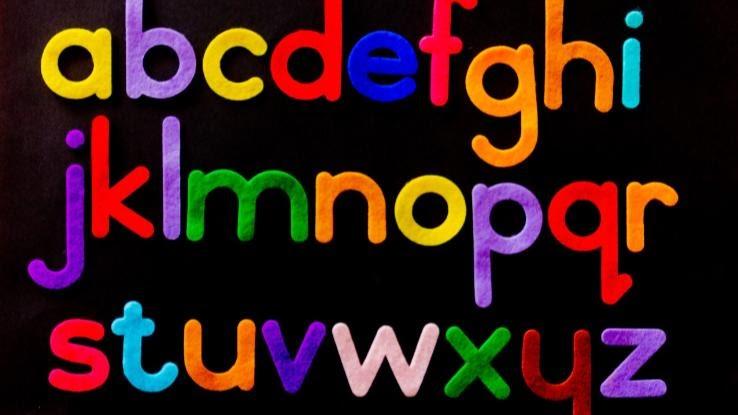
He wrote, "There will exist no C, 10 or Q in our everyday alphabet. They volition be abandoned because unnecessary [sic]. Spelling by sound will have been adopted … " He was half-right. Language has continued to change and grow more phonics-based, but nosotros still have all our letters!
2020 Nanomobility — Michael J. O'Farrell
Have you ever heard of the Nanomobility Era? No? That'southward probably because information technology never came to pass. Michael J. O'Farrell has worked in the tech industry since 1985. He's seen the rise of personal dwelling house computers, the Internet and smartphones, but he doesn't have a great handle on possible technology timelines.
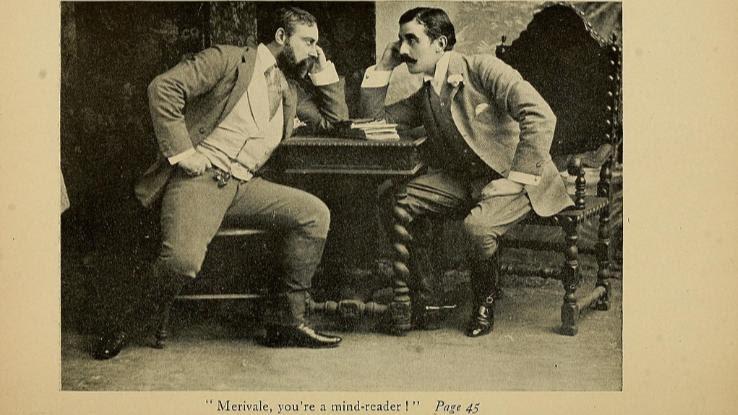
O'Farrell produced yet another failed prediction drawn from the pages of Shift 2020. He said, "In the pending nanomobility era, I predict telepathy and teleportation will become possible past the yr 2020 — with both commonplace by 2040." Only Scotty isn't quite gear up to beam us up — nevertheless!
Forced Vegetarianism — Gustav Bischoff
Not every failed prediction comes from a place of hubris or insanity. Some are the product of common cold, hard calculation and logic. Gustav Bischoff, the president of the American Meat Packers Clan, told a New York Times reporter in 1913 that the futurity of meat was in the easily of the wealthy.

He said that future Americans would probable survive "on rice and vegetables" due to a shortage of meat. The man greatly underestimated the centuries-old entreatment of a hamburger, fried chicken or pork chops. If Bischoff'due south prediction had get real, there'd be no Arby'southward and no McDonald'southward. No thanks.
Phenomenon Pill — Francois Ody
Modernistic consumers are wise enough to know that any product with the word 'miracle' attached to it is probably a hunk-of-junk scam. Predicting that the entire medical profession could exist made obsolete with the industry of so-called 'miracle pills' is nearly as accurate as finding out that humans really tin can survive on a diet of only water and air.

Francois Ody was a French surgeon with large ideas. He envisioned a virtually-future where sick people could swallow a "substance which, in the form of a capsule, will capture the sources of energy that will bring recovery within hours."
Phone Vesture — Ray Kurzweil
Many of futurist Ray Kurzweil's predictions take come to pass. His batting boilerplate in terms of right and accurate assessments of the time to come is college than nigh any other modern-day futurist's, but that doesn't mean he hasn't been incorrect well-nigh a few things.
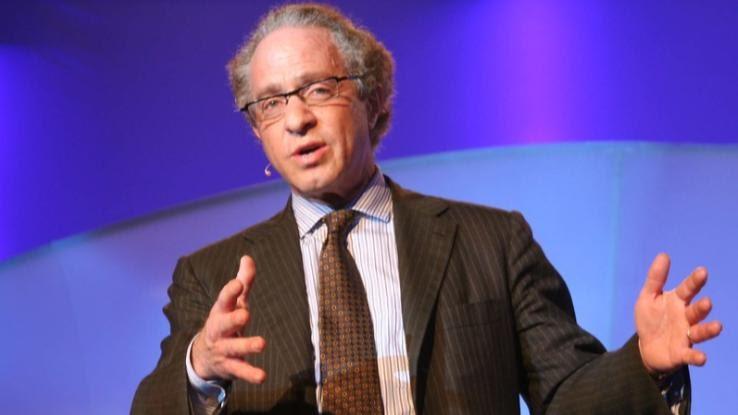
Take, for instance, his prediction that cell phones would become integrated into habiliment. Sure, people are pretty attached to their phones, just no, your pants or sweater probably can't connect to your phone via Bluetooth and circulate some sweet jams. Information technology's probably for the best – what if your jeans started blasting some questionable textile?
Therapy Bot — Ariane Van De Ven
Recent predictions can be just every bit wrong as ones made decades or more than agone. Ariane Van de Ven, a global trends expert, fabricated a pretty brave prediction about life in 2020 back in 2014. Her prediction was published as office of Shift 2020, a book about technology and life in the yr 2020.

She wrote, "In that location volition be more robots used as therapists, companions, assistants, and fifty-fifty friends to assist people in their every 24-hour interval." And so far, the closest matter to a robot that most people have in their homes is Alexa.
A Helicopter for All — Popular Mechanics
Sports coupes are and so passe, right? What everyone needs is a jet-powered, two-seater personal helicopter. At least, that's what Popular Mechanics thought in its February 1951 result. Showcasing the abilities and speed of the "Hiller Hornet," a personal shipping that cost a whopping $5,000, the magazine claimed that such transportation would soon become common.

Unless you live next to multi-millionaires with private helipads and tons of gadgets, it's unlikely that your neighbors are operating their own tiny helicopters. This fad never managed to take off (pun intended).
Nuclear-Powered Vacuum Cleaners — Alex Lewyt
A nuclear-powered vacuum cleaner sounds like something out of the Fallout universe, but according to the president of the Lewyt Vacuum Cleaner Company in 1955, "Nuclear powered vacuum cleaners volition probably be a reality within 10 years." 1965 has come and gone. Where are the atomic vacuum cleaners, huh?
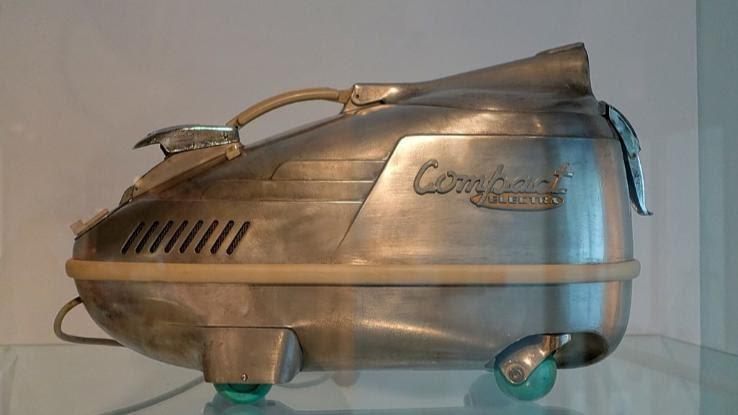
So once more, putting atomic energy into the hands of consumers is a swell way to crusade disasters of epic proportions, so information technology'south probably for the best that this prediction ended upwards being a bust.
Internet Supernova — Robert Metcalfe
Emerging technologies tend to generate weird and wonky predictions. In 1995, Ethernet creator Robert Metcalfe made a bold prediction concerning the future of the newly prospering Internet.

He said that the Internet "will before long go spectacularly supernova and in 1996 will plummet." He was and so confident in his prediction that he vowed to eat his own cavalcade in Infoworld should he happen to be wrong. Like a skillful sport, he did munch down on some printed paper near the end of 1996.
Apple Would Shut Downward — Michael Dell
During the mid-1990s, Steve Jobs got reamed past competitors. Everyone and their cousin was shooting their mouths off about how Jobs should shut Apple downwards and call it quits. Before taking the world earnest with 1997's iMac, Apple tree was struggling to continue pace with other companies.
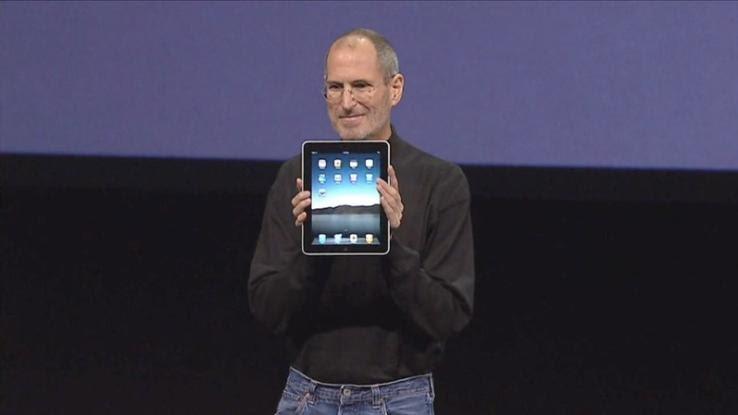
One competitor — Michael Dell, founder of Dell personal computers — addressed questions about how he'd handle the Apple visitor, and he famously replied that he would "shut it down and give the coin back to the shareholders." Thank goodness Jobs had the confidence to ignore such statements, or we might non take Apple products today.
No Such Thing as Heart or Brain Surgery — Sir John Eric Erichsen
Surgery is one of the oldest forms of healthcare in man history. All the same, fantastically named British surgeon Sir John Eric Erichsen once suggested that in the time to come, "The abdomen, the chest, and the brain volition forever exist shut from the intrusion of the wise and humane surgeon."
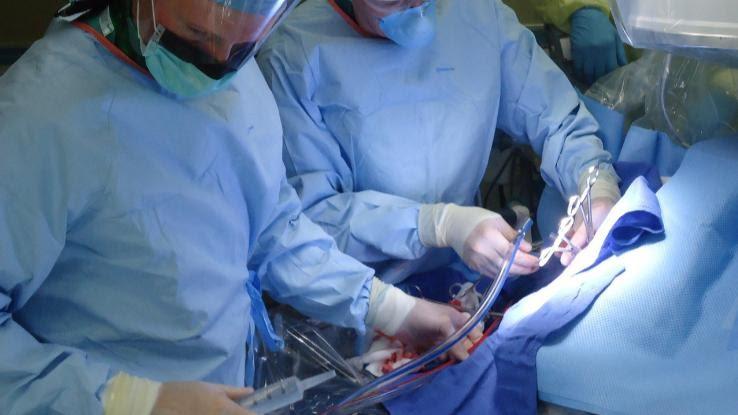
Needless to say, he was overly optimistic. Because how much training doctors and surgeons need to care for patients, it'southward no surprise that no engineering science has rendered surgery obsolete.
Sunny Skies Ahead — Michael Fish
On October xv, 1987, one British forecaster allayed public concern that a great storm was approaching the British Isles. He said, "Earlier on today, apparently, a woman rang the BBC and said she heard there was a hurricane on the style. Well, if you lot're watching, don't worry, there isn't!" Naturally, he was incorrect.

The Great Storm of 1987 hit England only hours after this poor prediction, resulting in billions of dollars worth of damage and the deaths of 19 people. The moral of the story: Don't undersell a potentially unsafe, violently swirling cyclone with winds of 122 mph.
No Atomic Bombs — Admiral William Leahy
United States Admiral William Leahy was the senior-most officer in the United states of america war machine during World War Ii. Most every plan of attack and every maneuver was planned by or canonical by Leahy. He held some admirable beliefs apropos the use of atomic weapons — namely his prediction that US armed services forces would never employ a nuclear bomb.
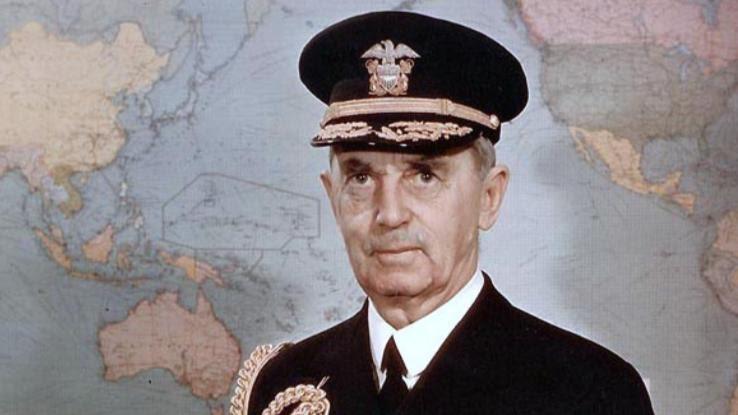
Sadly, the experienced officer was proven incorrect on August sixth, 1945. That was the twenty-four hours that an American B-29 bomber plane released "Little Male child," an atomic weapon that exploded with the force of over a dozen tons of TNT.
fleischmannexprion.blogspot.com
Source: https://www.faqtoids.com/history/predictions-history-proved-wrong?utm_content=params%3Ao%3D740006%26ad%3DdirN%26qo%3DserpIndex
0 Response to "What Is the Best Way to Really Prove to Yourself That You Understand an Idea?"
Post a Comment